Tell us about the job
Takes about a minute. No obligation.
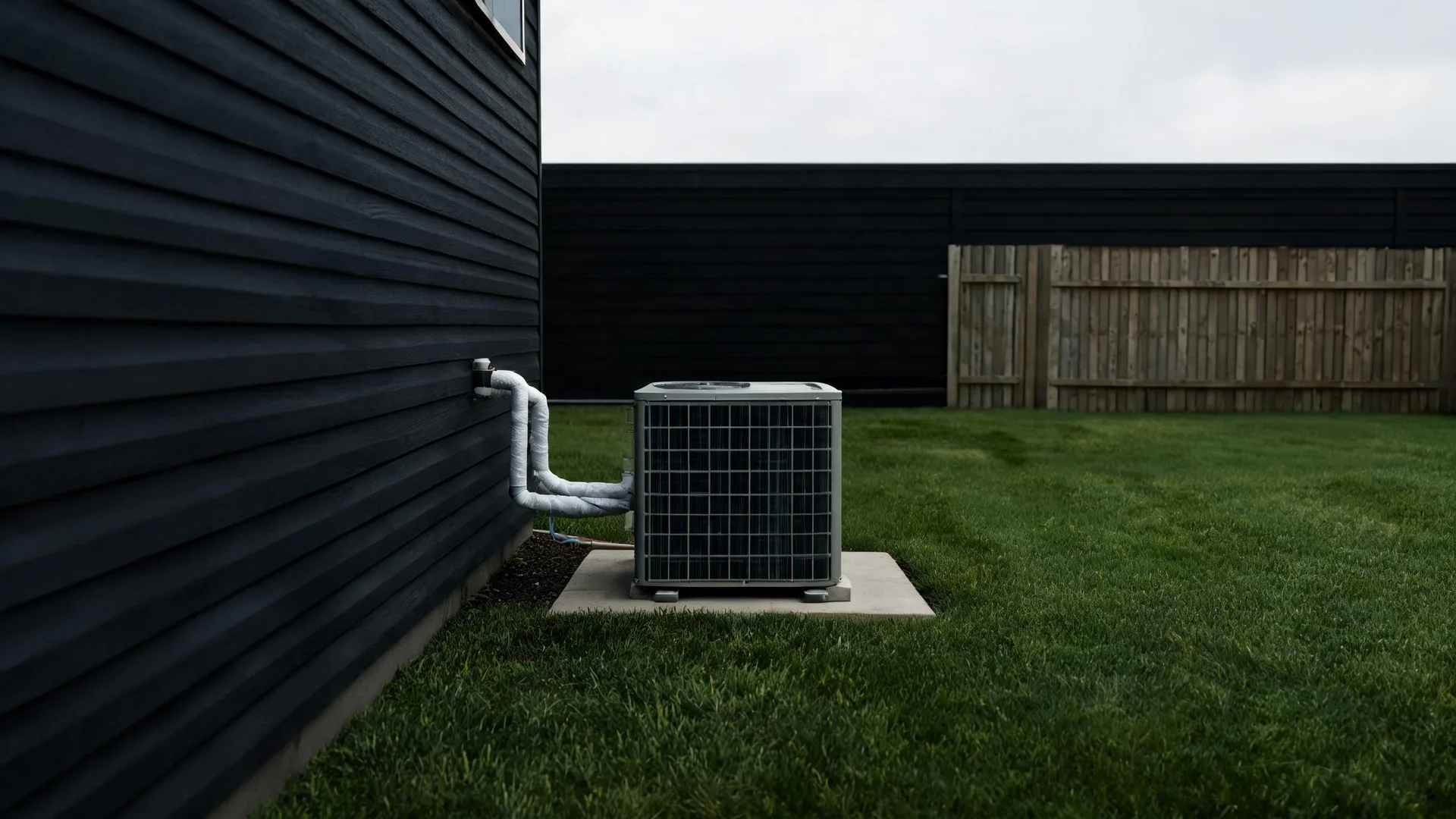
A central AC unit in this area spends almost no time doing the job it was built for. Homes in Copper River Census Area, AK have essentially no cooling season — no month of the year is warm enough to call for it. Compressors that sit idle for years can seize or develop refrigerant leaks from degraded seals, and contactors corrode without the regular cycling that would otherwise keep contact surfaces clean. When a system finally gets called on and fails, the fault a contractor finds is more likely to trace back to prolonged dormancy than to wear from running. That shapes what gets inspected first.
Ductwork and wiring that have outlasted more than one generation of equipment carry a repair history a contractor reads only after opening the system. Half the homes in Copper River Census Area, Alaska were built in 1985 or earlier (2020-2024 ACS 5-year). A compressor or evaporator coil in a house that old has likely run through multiple refrigerant transitions, connector corrosion, and seal degradation that no exterior inspection catches. What a contractor finds inside decides whether a repair is a single failed part or the start of a longer conversation about what the system around it has been carrying.
The Parts of a Central AC a Contractor Checks First
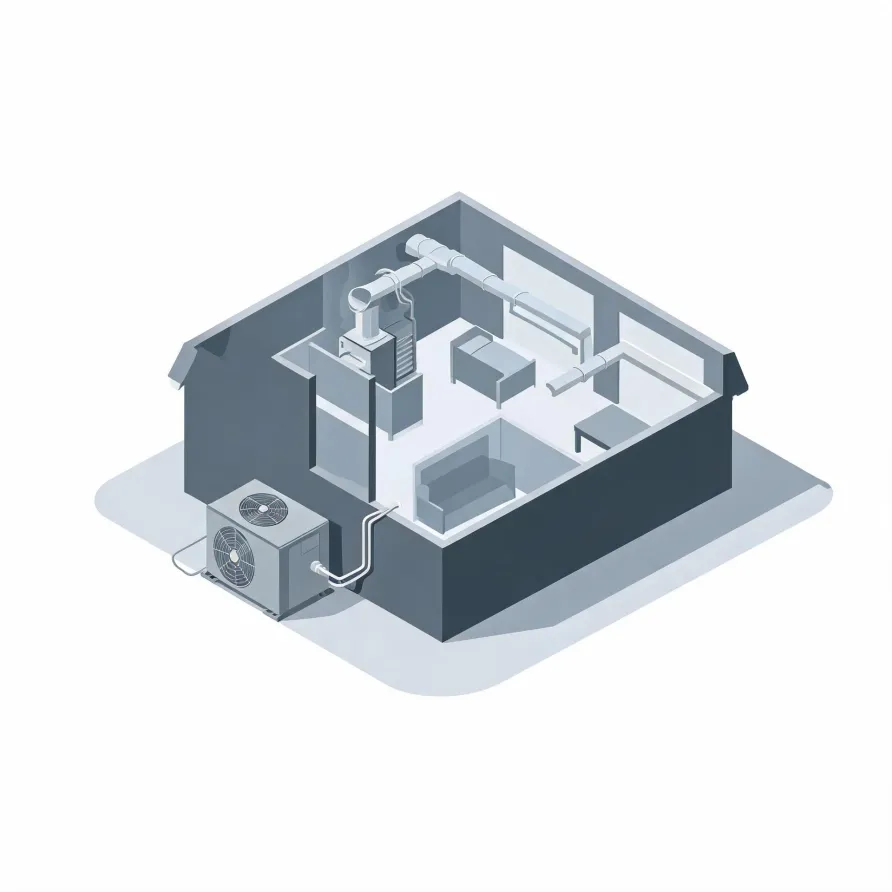
The outdoor condenser unit sits outside the house, usually on a concrete pad at ground level, and it is where heat pulled from inside gets released. The indoor air handler or furnace blower sits inside, often in a utility closet, basement, or attic, and it is what moves air across the evaporator coil. That coil, mounted inside the air handler, is where the refrigerant does its work, and it is one of the first things a contractor will inspect when cooling fails.
The refrigerant lines run between the indoor and outdoor units, carrying refrigerant back and forth, and a leak anywhere along them will stop the system from cooling properly. The thermostat on the wall is the control point for the whole system, and a fault there can mimic a much larger problem. The capacitors and contactors inside the outdoor unit take the load of starting and running the compressor, and they are among the most common components a contractor checks early in a repair.
The drawing shows the general layout of a central AC system, and a licensed contractor determines what applies to this particular house.
Find a contractor in Copper River Census AreaCopper River Census Area, by the numbers
Half the homes in Copper River Census Area, Alaska were built in 1985 or earlier (2020-2024 ACS 5-year).
U.S. Census Bureau, 2020-2024 American Community Survey 5-Year EstimatesCopper River Census Area, Alaska holds 2,442 housing units (2020-2024 ACS 5-year).
U.S. Census Bureau, 2020-2024 American Community Survey 5-Year EstimatesOwners occupy 68.5% of the occupied homes in Copper River Census Area, Alaska (2020-2024 ACS 5-year).
U.S. Census Bureau, 2020-2024 American Community Survey 5-Year EstimatesCodes & Standards Covering Central AC Repair in Copper River Census Area, Alaska9 sourced rules and standards
What HVAC Repair Looks Like Out Here
Split-system central air conditioners rated below 45,000 Btu/h manufactured on or after January 1, 2023 must meet a federal minimum of 13.4 SEER2.
Split-system central air conditioners rated at or above 45,000 Btu/h manufactured on or after January 1, 2023 must meet a federal minimum of 13.4 SEER2.
Split-system central air conditioners manufactured between January 1, 2015 and December 31, 2022 had to meet 13 SEER, the metric that preceded SEER2.
Single-package central air conditioners manufactured on or after January 1, 2023 must meet a federal minimum of 13.4 SEER2.
Space-constrained central air conditioners manufactured on or after January 1, 2023 must meet a federal minimum of 11.7 SEER2.
Federal efficiency standards for split-system central air conditioners and heat pumps are set on each certified combination of outdoor unit and indoor coil rather than on the outdoor unit alone.
Residential and light commercial air conditioning and heat pump systems assembled in the field, including mini-splits and unitary systems, may not be installed on or after January 1, 2025 using a refrigerant with a global warming potential above 700.
A field-assembled system whose specified components were all manufactured or imported before January 1, 2025 carries no installation compliance date under the refrigerant restrictions and may still be installed.
Licensing Rules for HVAC Repair in Copper River Census Area, Alaska
Alaska requires a certificate of registration as a contractor: a person may not submit a bid or work as a contractor until the department has issued one.