



The R-410A phase-out and new AC units in Alaska

Skip collecting and comparing quotes for the new air conditioner.

Describe it once

Can I still buy a new AC unit with R-410A in Alaska?

You've seen the news about R-410A being phased out and you want to know if it affects a new install this summer. With Alaska summers running hot and dry, you want your AC working when you need it, and you don't want to buy a unit that's already out of date or hard to get parts for down the road.

No. New AC units now use R-454B instead of R-410A.

As of 2025, manufacturers stopped making new residential air conditioners that use R-410A. The replacement refrigerant is R-454B, and it's what you'll get in any new unit installed now. This isn't a recall or a problem with R-410A systems already running. If your AC came with the house and uses R-410A, it will keep working and can still be serviced. The change only applies to new equipment. For a new install this summer, this means the unit on your roof or pad will run on R-454B, which is built into the system from the factory. You don't choose the refrigerant separately, and it doesn't change how the AC cools your home during Alaska's hot, dry summers.

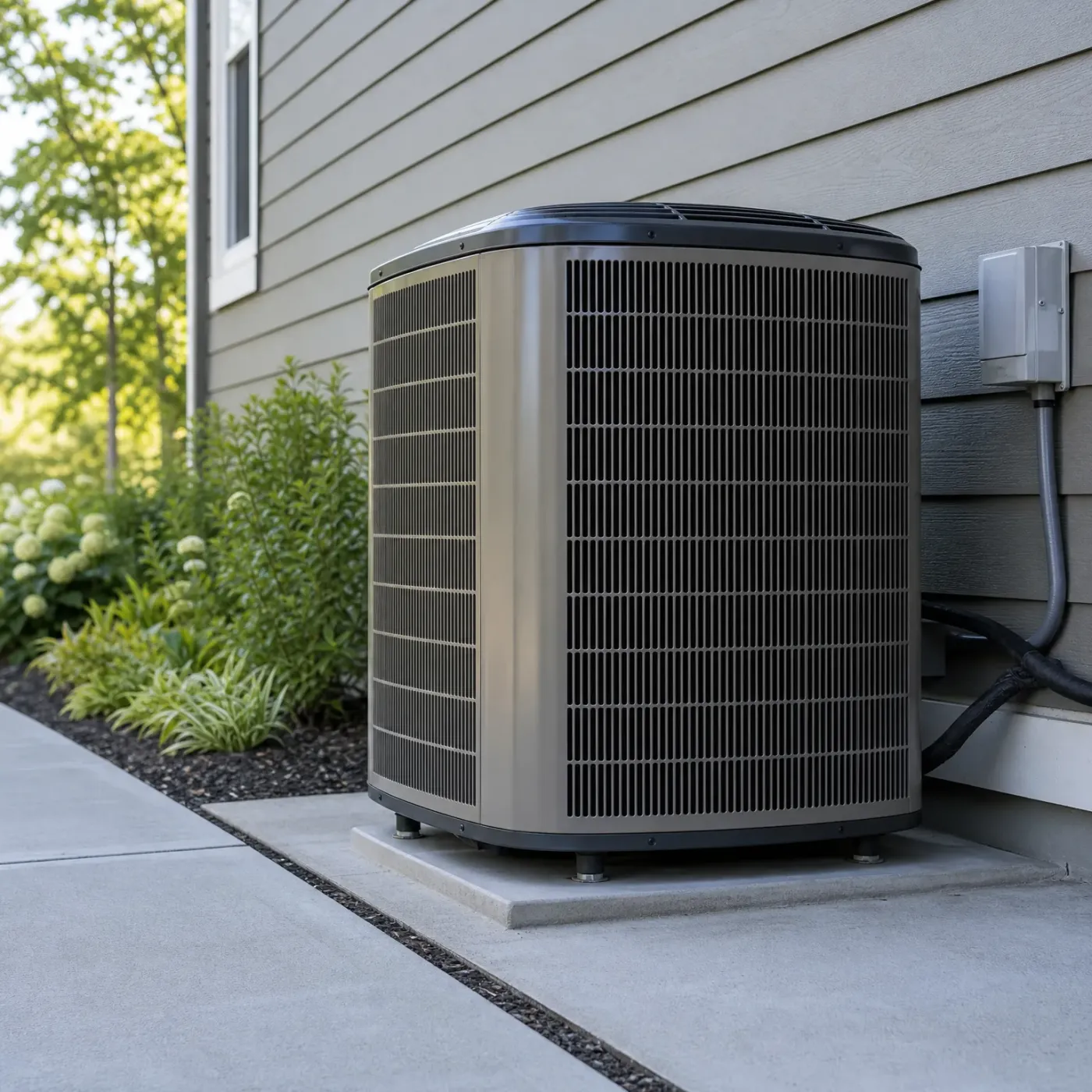
An outdoor air conditioner condenser unit on a concrete pad beside a house wall, with a gray electrical disconnect box and conduit above it and grass in the foreground.

Why the refrigerant changed

R-410A is being phased down because of its effect on the atmosphere, not because it stopped working. Units already running on it are not affected, and a contractor can still service them. New equipment built from 2025 forward uses R-454B instead, a refrigerant that does the same job of absorbing heat from inside your house and releasing it outside, through the same compressor and coil setup your old system used.

A gray outdoor air conditioner condenser unit on a concrete pad beside a house with horizontal lap siding, surrounded by white gravel and a lawn, with a white wall at left.

What this means for installers

A licensed contractor working in Alaska has already been through this changeover before, since it happened on the heating side with furnaces and water heaters in past years too. They know which new units are stocked locally, what fittings and refrigerant lines the swap requires, and how to size a system for dry heat rather than humidity, which is what your summers actually call for.

Keep It Running or Replace It

Keep your R-410A unit

  • A contractor can still service and recharge a unit already running on R-410A, since the refrigerant itself isn't banned from use.
  • Replacement parts and repairs stay available for existing systems, so an aging unit isn't suddenly stranded.
  • If your AC was installed before 2025, it likely runs on R-410A and that's fine for the life of the equipment.
  • Your power bill depends more on how well the unit cools your home than on which refrigerant is inside it.
  • You skip the cost of a new install now and get more years out of equipment that already does the job.

Install new equipment now

  • New units sold from 2025 forward use the replacement refrigerant, so a fresh install won't be on R-410A at all.
  • A new system comes with a full manufacturer warranty, where an older unit may be past its coverage window.
  • A contractor sizing a new unit can match it to Alaska's hot, dry summer days instead of to whatever was standard years ago.
  • If your current unit is already struggling to keep the house cool, replacing it now avoids a breakdown during peak heat.
  • Newer compressors and coils are often built to run more efficiently, which matters where power costs run high.
A gray outdoor air conditioner condenser unit on a concrete pad beside a house with white horizontal siding and a brick foundation, with a wall-mounted disconnect box and conduit, and a green shrub with mulch at left.

A unit that's kept up with

A clean condenser like this one pulls outside air through the coil without a fight. In a dry Fairbanks or Anchorage summer that matters, because dust and cottonwood fluff cake onto a dirty coil fast and the unit has to work harder to move the same heat.


An outdoor air conditioning condenser unit on a concrete pad beside a house with white horizontal vinyl siding, with a gray electrical disconnect box and refrigerant lines on the wall behind it.

A unit that's falling behind

That grime on the grille blocks airflow through the coil, so the compressor runs longer to cool the same house. On top of Alaska's power rates, that shows up on the bill before the unit itself ever fails.

A woman in a knitted shawl sits in a living room with a fireplace, shelves, a sofa with cushions, and a lamp by a bright window, looking off to the side.
A woman with long brown wavy hair in a green shirt over a white top stands in a living room with built-in white shelves, a ceiling fan, a potted plant and a sliding glass door.
A woman with shoulder-length gray-streaked hair in a light gray knit sweater stands smiling and looking off to the side in a living room with a sofa, houseplant, framed picture, and sunlit sliding glass door.
A woman with shoulder-length curly gray hair wearing a gray knit sweater stands near a window with a sheer curtain, looking to the side, with a blurred interior room behind her.
An outdoor air conditioning condenser unit on a concrete pad beside a house with horizontal lap siding, with a gray electrical disconnect box and conduit on the wall and green shrubs and trees to the left.

Skip calling around

One installer gets your project, so there's no bidding war over it.

Skip the round of in-home estimates for a new air conditioner.

Start one form

There's no charge for the request.

A gray outdoor air conditioner condenser unit on a concrete pad beside a house with horizontal siding and a stucco foundation, with a disconnect box and conduit on the wall, decorative gravel, mulch, and a shrub nearby.
A clear coil like this moves heat outside the way it was designed to, keeping the house comfortable without pushing power use.
An outdoor air conditioning condenser unit on a concrete pad beside a house with horizontal lap siding, with an electrical disconnect box and conduit on the wall, mulch and a green shrub to the right, and a concrete walkway in the foreground.
A coil caked with dirt and debris makes the unit run longer to do the same job, and that shows up on a power bill in Alaska.

How a new system is built

  • A new system built for R-32 or another replacement refrigerant uses a different compressor matched to that refrigerant's pressure, not a retrofitted R-410A compressor.
  • The line set size and the metering device are set for the new refrigerant, so a contractor sizes the whole system around it rather than swapping one part.
  • R-32 carries heat differently than R-410A, so the coil size and airflow across it are engineered for that difference, not just scaled up from an old design.
  • A mismatched charge or the wrong metering device setting shows up as the unit short cycling or failing to hold temperature during an Anchorage or Fairbanks heat spell.
  • New refrigerants carry a mild flammability rating, which changes how a contractor handles the line set and charges the system during install.
  • Manufacturers stopped building R-410A outdoor units for sale as of 2025, so a new install this summer means new refrigerant equipment, not old stock.

A new AC is not an R-410A unit with a different label on the refrigerant line. The compressor is built for the pressure that R-32 or another replacement refrigerant runs at, and that pressure is not the same as R-410A's. The line set, the metering device, and the coil are all sized around that one refrigerant from the start. A contractor working on a new install is sizing a matched system, not swapping a part into an old design.

That matters most when something is off. If the charge is wrong or the metering device is set incorrectly, the unit does not just run a little weak. It short cycles, or it runs and runs without pulling the house down to temperature, and that shows up fast during a stretch of heat in Anchorage or Fairbanks. A system sized and charged correctly for its refrigerant does not have that problem.

The new refrigerants carry a mild flammability rating, which is new for residential AC. It changes how a contractor handles the line set and the charging process during install, with more care around where connections are brazed and how the system is pressure tested before it's charged. None of that is a reason to delay a new install. It's a reason the install matters more than it used to, and why the equipment going in this summer is new refrigerant equipment built for it, not older stock held over from before 2025.

An outdoor air conditioner condenser unit on a concrete pad beside a house with light horizontal vinyl siding, surrounded by bare dirt, gravel and dry leaves, with refrigerant lines and conduit running along the wall.
Before you get your air conditioner installation
A gray outdoor air conditioner condenser unit on a concrete pad beside a house with horizontal lap siding, with a flowering shrub at left and a disconnect box with conduit on the wall at right.
After you get your air conditioner installation

If your unit still runs fine

A working R-410A system can keep cooling your house through plenty more hot, dry Anchorage or Fairbanks summers. A contractor can still charge it, swap a bad capacitor, replace a worn fan motor, whatever it needs. Nothing about the phase-out forces you to touch a unit that's doing its job. The risk is further out: if the compressor fails years from now, finding R-410A and the parts for it may take more time and cost more than it does today. For now, a unit that's cooling your house on a hot July afternoon doesn't need to change.

If you're already replacing it

A failing compressor, a leak that keeps coming back, or a unit old enough that parts are getting hard to find all point the same direction. If you're facing that decision this summer, installing new R-410A equipment means buying into a refrigerant being phased down right as you start, while the new systems are built for the long run ahead. With power costs in Alaska among the highest in the country, the unit you choose now is the one your bill answers to for years. Either refrigerant cools your house. The difference is what's available behind it later.

Power costs 26.11 cents per kilowatt-hour statewide

At 26.11 cents per kilowatt-hour, every hour your AC runs costs more here than in almost any other state. A unit matched to your house and sized right won't run longer than it has to, which is where that rate hits hardest.

EIA-861 2025 statewide residential average

A gray outdoor air conditioner condenser unit on a concrete pad beside a house with dark horizontal siding and a stone base, surrounded by gravel, with a flowering shrub at left and a concrete walkway in front.

Running clean

This is what a condenser should look like, fins clear and the pad clean around it. It pulls in air and pushes heat out with nothing fighting it. Set against the house like this, it does its job on the hottest Anchorage afternoon without straining.

An outdoor air conditioner condenser unit sits on a concrete pad beside a stucco wall, with refrigerant lines and conduit running to the wall and a shrub to the left.

Worn down

Grime like this across the fins means the unit works harder to move the same heat. Lines running into the wall are original to the install, and if the casing looks like this, the compressor inside has likely put in years of hard summers. That's worth having a contractor look at before it quits.

A woman and a sleeping child wrapped together in a cream knitted blanket on a couch, with a potted plant, framed photo and lit lamp in the background.
A gray-haired woman in a cream knit sweater stands in a dimly lit kitchen at night, looking to her right, with a round loaf of bread in the foreground and a dark window and potted plant behind her.
A two-story gray horizontal-siding house with multiple gables, a covered front porch with white columns and railing, and a dark front door, fronted by a patchy green and brown lawn under a clear blue sky.

A dew point is what tells you how heavy the air actually feels, and here it averages 47°F across June, July and August, according to NOAA climate normals. That's dry air. An air conditioner's job is mostly pulling heat out, not wringing moisture out, so it doesn't have to run as long to get a room comfortable. You'll notice it in how fast the house cools back down after the front door's been open, and in a system that cycles off instead of running flat out all afternoon. A unit sized for this air works differently than one built for a muggy climate.

NASA POWER T2MDEW county cells weighted by homes

R-410A isn't disappearing from Alaska. A working unit keeps running and a contractor can still service it, while new installs move to a different refrigerant built for lower pressure and a different compressor. Whichever side of that you're on, the install matters more than the refrigerant label, sized right for your house, your coil kept clean, the charge matched to the equipment. That's where a local contractor earns their keep, someone who sees Anchorage and Fairbanks systems every summer and knows which ones struggle with the dust and the fluff and which ones don't. You'll be matched with one contractor, licensed to work on your equipment, not a handful of companies competing for your callback. No sorting through quotes or explaining your system twice. Whether your AC is running fine on R-410A or you're weighing a new install, you know where you stand now, and getting the right person on it is one step away.

An outdoor air conditioner condenser unit on a concrete pad beside a dark horizontal-lap sided house, with mulch beds, shrubs and ornamental grasses nearby.

Describe it once

Only one pro gets your request, so you hear from one company.

Step 1 of 3: Equipment