Tell us about the job
Takes about a minute. No obligation.
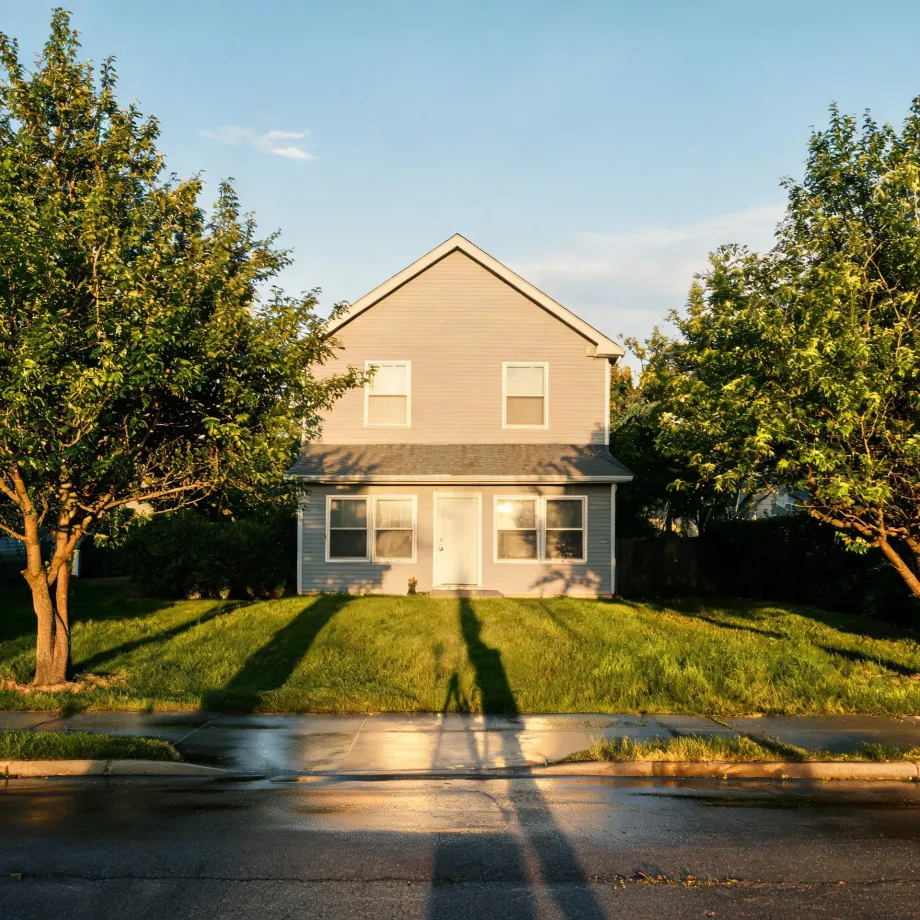
A contractor diagnosing a central AC system here has to rule out one cause before the others: long idle periods rather than overwork. Homes in Kenai Peninsula Borough, AK have essentially no cooling season — no month of the year is warm enough to call for it. A compressor that sits off for the full calendar year develops seal degradation, refrigerant migration, and capacitor failure on timelines that have nothing to do with how hot summers get. When a unit does not start on the first warm day, the fault is usually something that sat too long, and a contractor will check the capacitor, the contactor, and the refrigerant charge before assuming the compressor itself is gone.
Ductwork in a house this age carries its own history. Seams sealed with mastic or tape decades ago dry out, joints shift, and what looked like a functioning system at the last service call can be moving conditioned air into wall cavities instead of rooms. Half the homes in Kenai Peninsula Borough, Alaska were built in 1990 or earlier (2020-2024 ACS 5-year). That means a repair contractor opening a central AC unit here is working out whether the problem is the equipment or whether degraded duct runs are loading the system past what it was meant to handle. Parts availability for the unit itself is a separate question, and a contractor prices that once the diagnosis is done.
The Parts of a Central AC a Contractor Checks First
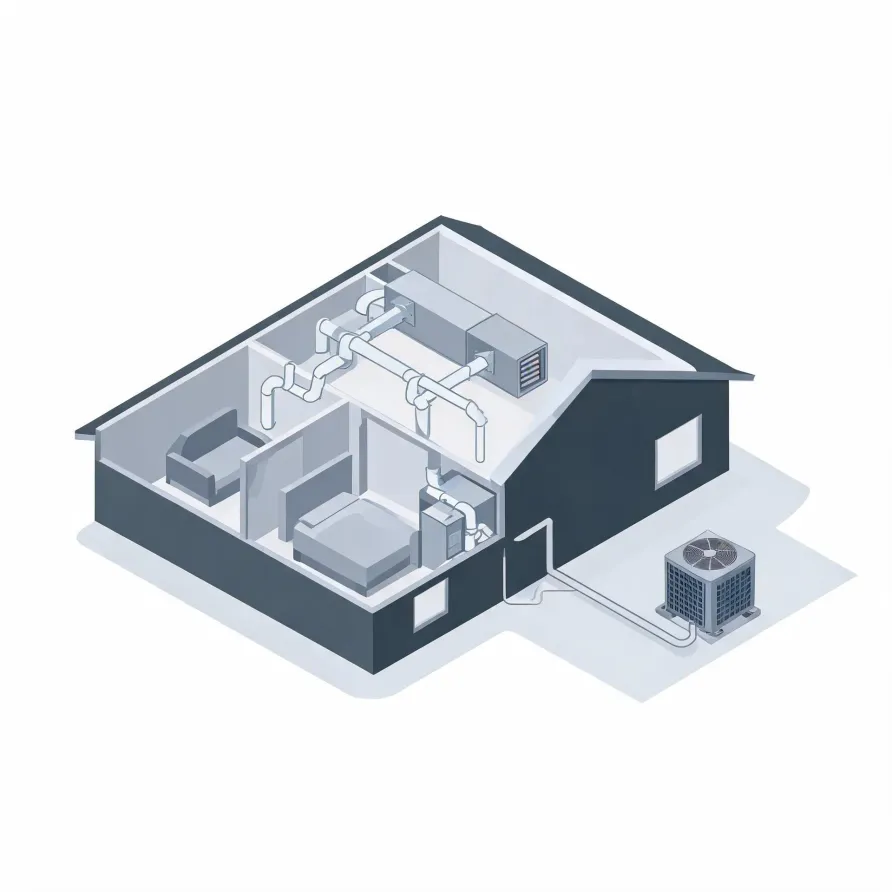
The outdoor condenser unit sits outside the house, usually on a concrete pad at ground level, and it is where heat gets shed to the outside air. The indoor air handler or furnace coil sits inside, most often in a basement, utility closet, or attic, and it is the piece that cools the air before it moves through the house. When something feels off, a contractor starts at both ends.
The refrigerant lines run between the two units and carry the working fluid that makes cooling possible. The thermostat on the wall controls the whole system, and the capacitors and contactors inside the outdoor cabinet are the small electrical components that start and run the motors. These are the pieces a contractor opens the cabinet to reach.
The drawing shows the general layout of a central system, and a licensed contractor determines what applies to the specific equipment and configuration in your house.
Find a contractor in Kenai Peninsula BoroughKenai Peninsula Borough by the numbers
Half the homes in Kenai Peninsula Borough, Alaska were built in 1990 or earlier (2020-2024 ACS 5-year).
U.S. Census Bureau, 2020-2024 American Community Survey 5-Year EstimatesKenai Peninsula Borough, Alaska holds 32,836 housing units (2020-2024 ACS 5-year).
U.S. Census Bureau, 2020-2024 American Community Survey 5-Year EstimatesOwners occupy 77.0% of the occupied homes in Kenai Peninsula Borough, Alaska (2020-2024 ACS 5-year).
U.S. Census Bureau, 2020-2024 American Community Survey 5-Year EstimatesCodes & Standards Governing Central AC Repair in Kenai Peninsula Borough, Alaska9 sourced rules and standards
What HVAC Repair Looks Like in Kenai Peninsula Borough
Split-system central air conditioners rated below 45,000 Btu/h manufactured on or after January 1, 2023 must meet a federal minimum of 13.4 SEER2.
Split-system central air conditioners rated at or above 45,000 Btu/h manufactured on or after January 1, 2023 must meet a federal minimum of 13.4 SEER2.
Split-system central air conditioners manufactured between January 1, 2015 and December 31, 2022 had to meet 13 SEER, the metric that preceded SEER2.
Single-package central air conditioners manufactured on or after January 1, 2023 must meet a federal minimum of 13.4 SEER2.
Space-constrained central air conditioners manufactured on or after January 1, 2023 must meet a federal minimum of 11.7 SEER2.
Federal efficiency standards for split-system central air conditioners and heat pumps are set on each certified combination of outdoor unit and indoor coil rather than on the outdoor unit alone.
Residential and light commercial air conditioning and heat pump systems assembled in the field, including mini-splits and unitary systems, may not be installed on or after January 1, 2025 using a refrigerant with a global warming potential above 700.
A field-assembled system whose specified components were all manufactured or imported before January 1, 2025 carries no installation compliance date under the refrigerant restrictions and may still be installed.
Licensing Rules for Contractors in Kenai Peninsula Borough, Alaska
Alaska requires a certificate of registration as a contractor: a person may not submit a bid or work as a contractor until the department has issued one.